
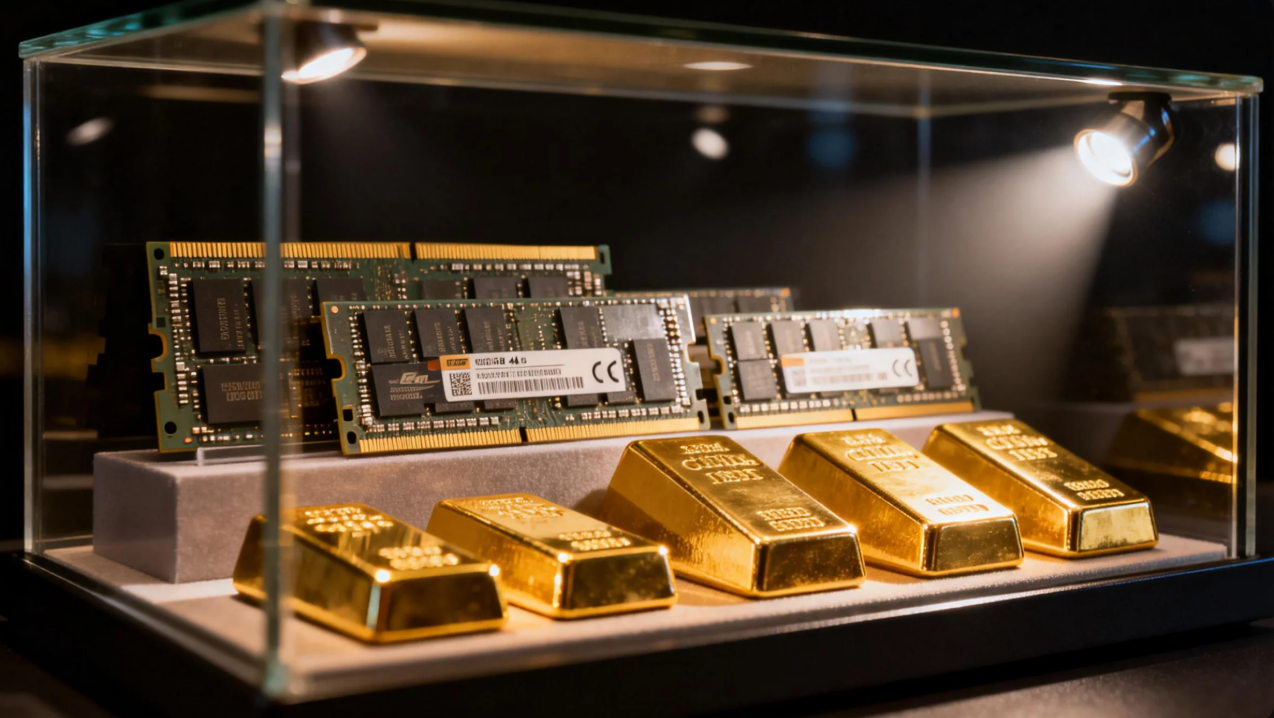
From Confusion to Systematic Judgment: A Comprehensive Guide to Memory Chips
This article is tailored for three specific groups of readers:
- Beginners new to memory chips
- Chip distribution professionals
- Individuals aiming to build “memory” into a long-term business category
If you’ve always mixed up terms like DRAM, Flash, eMMC, NAND, and NOR, this article is your foundational guide to clarity.
I. Clarifying the Basics of Memory Chips (Overall Classification)
In the semiconductor industry, Memory is a broad category divided into two primary types:
Memory
├─ Volatile Memory (Data lost when power is off)
│ └─ DRAM
│ ├─ SDRAM
│ ├─ DDR / DDR2 / DDR3 / DDR4 / DDR5
│ └─ LPDDR (for mobile/low-power devices)
│
└─ Non-Volatile Memory (Data retained when power is off)
├─ NAND Flash
│ ├─ SLC / MLC / TLC / QLC
│ └─ eMMC / UFS / SSD
│
└─ NOR Flash
A Quick Takeaway:DRAM is “working memory”, while Flash is “storage memory”.
II. What is DRAM? (The “Memory Chips” You Encounter Most Often)
1. The Nature of DRAM
- Dynamic Random Access Memory
- Requires constant refreshing to retain data
- Fast speed & large capacity
- Volatile (data erased after power outage)
👉 99% of the memory used by CPUs during operation is DRAM.
2. Generational Evolution of DRAM (Extremely Critical)
SDRAM → DDR → DDR2 → DDR3 → DDR4 → DDR5
Newer generations deliver:
- Higher frequency
- Lower power consumption
- Lower voltage
Important Note:
Generational upgrades do not mean immediate obsolescence of older versions.
Industrial control, communication, and financial equipment still widely use DDR3 and DDR4 for long-term operations.
3. Common Application Categories of DRAM
- Server/Industrial Control (prioritizing stability above all)
- PC/Laptop
- Consumer Electronics
- Communication Equipment
- Automotive Electronics
III. What is Flash? (Including NAND, NOR, and eMMC)
1. The Nature of Flash
- Non-volatile memory
- Designed for “storing data”, not “running programs”
- Slower in speed compared to DRAM
2. NAND Flash (The Most Mainstream Option)
Key Features:
- Large capacity
- Low cost
- Limited erase/write cycles
Classification by Memory Cell Type
| Type | Characteristics |
|---|---|
| SLC | Highest stability & highest cost |
| MLC | Moderate stability |
| TLC | Mainstream choice |
| QLC | Lowest cost & shortest lifespan |
3. NOR Flash
- Small capacity
- Fast read speed
- Widely used for boot code storage
4. What Are eMMC and UFS?
They are not “chip types”, but integrated solutions combining packaging and controllers.
- eMMC = NAND Flash + Controller + Packaging
- UFS = High-speed version of eMMC
Widely Applied in:
- Mobile phones
- Industrial control devices
- IoT products
IV. What is eMMC? (The Most Common Source of Confusion)
eMMC stands for Embedded MultiMedia Card.
Core Definition:
eMMC = NAND Flash + Controller + Standard Interface
It is not a new storage technology, but an integrated form factor.
V. DRAM Naming Conventions of the Top Three Manufacturers (Full Datasheet-Level System)
This section is not just “examples”; it breaks down the naming logic from official datasheets into user-friendly rules. From now on, you can decode any DRAM part number segment by segment.
① Samsung DRAM Full Naming Convention
▶ Standard Structure (Applicable to DDR3/DDR4/DDR5)
K4 A 8 G 165 W G – B C W E
│ │ │ │ │ │ │ │ │ │ │
│ │ │ │ │ │ │ │ │ │ └─ Die Revision
│ │ │ │ │ │ │ │ │ └── Temperature Grade
│ │ │ │ │ │ │ │ └──── Speed Grade
│ │ │ │ │ │ │ └────── Package Type
│ │ │ │ │ │ └──────── I/O Width
│ │ │ │ │ └────────── Density
│ │ │ │ └──────────── Density Unit
│ │ │ └────────────── Generation
│ │ └──────────────── DRAM Identifier
│ └────────────────── Manufacturer Code
└──────────────────── Fixed Prefix
▶ Generation Field (Most Critical)
| Letter | Meaning |
|---|---|
| B | DDR3 |
| A | DDR4 |
| C | DDR5 |
▶ Capacity (Density) Field (In Gigabits, Gb)
Samsung DRAM uses Gb as the standard unit. Common specifications are listed below:
| Identifier | Actual Capacity |
|---|---|
| 2G | 2Gb = 256MB |
| 4G | 4Gb = 512MB |
| 8G | 8Gb = 1GB |
| 16G | 16Gb = 2GB |
| 32G | 32Gb = 4GB |
❗ Critical Reminder for Beginners: Gb ≠ GB. This is the most common mistake for new learners.
▶ I/O Width Field (I/O Organization)
| Number | Meaning |
|---|---|
| 085 | x8 |
| 165 | x16 |
| 325 | x32 (Rare) |
Server and industrial control applications mainly use x8 or x16 configurations.
▶ Package Type Field
| Identifier | Meaning |
|---|---|
| WG | FBGA (Server/Industrial Control) |
| FG | FBGA (Consumer Electronics) |
| HG | CSP |
▶ Speed Grade Field (JEDEC Standard)
| Letter | JEDEC Speed |
|---|---|
| A | DDR4-2666 |
| B | DDR4-3200 |
| C | DDR4-2933 |
(Note: Different generations correspond to different speed tables, but the naming logic remains consistent.)
▶ Temperature Grade Field
| Letter | Temperature Range |
|---|---|
| T | Commercial Grade (0~85℃) |
| W | Industrial Grade (-40~105℃) |
▶ Die Revision Field
| Letter | Meaning |
|---|---|
| C | Early Version |
| D | Mid-term Version |
| E | Mature Version |
| F | Latest Version |
② SK hynix DRAM Full Naming Convention
▶ Standard Structure
H5 A N 8 G 6 N C J R – V K
│ │ │ │ │ │ │ │ │ │ │
│ │ │ │ │ │ │ │ │ │ └─ Temperature Grade
│ │ │ │ │ │ │ │ │ └──── Version/Speed Combination
│ │ │ │ │ │ │ │ └────── Die/Speed
│ │ │ │ │ │ │ └──────── Package Type
│ │ │ │ │ │ └────────── I/O Width
│ │ │ │ │ └──────────── Density
│ │ │ │ └────────────── Generation
│ │ │ └──────────────── DRAM Identifier
│ │ └────────────────── Manufacturer Code
└──────────────────── Fixed Prefix
▶ Capacity Field (In Gb)
| Identifier | Capacity |
|---|---|
| 4G | 4Gb |
| 8G | 8Gb |
| 16G | 16Gb |
▶ I/O Width Field
| Number | Meaning |
|---|---|
| 4 | x4 |
| 6 | x16 |
| 8 | x8 |
▶ Temperature Grade Field
| Identifier | Temperature Range |
|---|---|
| C | Commercial Grade |
| V | Industrial Grade |
| W | Extended Industrial Grade |
③ Micron DRAM Full Naming Convention
▶ Standard Structure
MT 40 A 1 G 16 T B – 062 E : F
│ │ │ │ │ │ │ │ │ │ │
│ │ │ │ │ │ │ │ │ │ └─ Temperature Grade
│ │ │ │ │ │ │ │ │ └──── Die Revision
│ │ │ │ │ │ │ │ └────── Speed Grade
│ │ │ │ │ │ │ └──────── Package Type
│ │ │ │ │ │ └────────── I/O Width
│ │ │ │ │ └──────────── Density
│ │ │ │ └────────────── Generation
│ │ │ └──────────────── DRAM Identifier
│ │ └────────────────── Product Series
│ └───────────────────── Manufacturer Code
└──────────────────────── Fixed Prefix
▶ Capacity Expression (Combination Format)
| Identifier | Meaning |
|---|---|
| 512M8 | 512Mb x8 |
| 1G16 | 1Gb x16 |
| 2G8 | 2Gb x8 |
▶ Speed Grade Field (JEDEC Standard)
| Number | Speed |
|---|---|
| 053 | 2666 |
| 062 | 3200 |
▶ Temperature Grade Field
| Identifier | Temperature Range |
|---|---|
| :T | Commercial Grade |
| :F | Industrial Grade |
Up to this point, you’ve learned a naming system that matches the rigor of official datasheets—just simplified into an easy-to-understand version.
VI. Integrating Everything into a “Cognitive Map”
Finally, just remember this logical framework:
Memory Chips
├─ DRAM (Working Memory)
│ ├─ DDR3 / DDR4 / DDR5
│ └─ Key Parameters: Generation / I/O Width / Temperature Grade / Die Revision
│
└─ Flash (Storage Memory)
├─ NAND (Capacity-focused)
│ ├─ SLC / MLC / TLC / QLC
│ └─ eMMC / UFS / SSD
│
└─ NOR (Boot Code-focused)
Final Words for Distributors
- Category
- Structure
- Naming Logic