
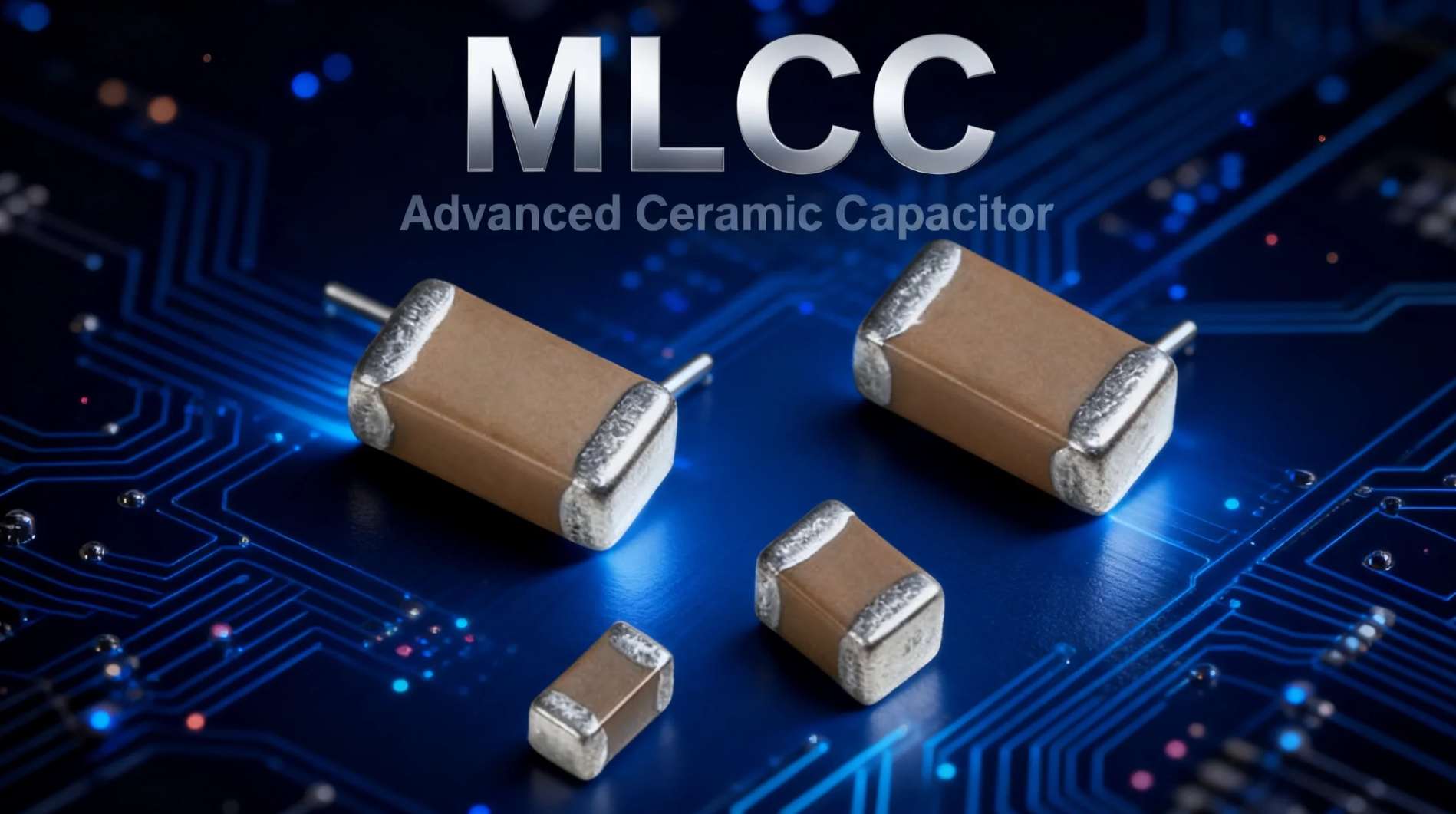
The MLCC shortage is spreading, with supply constraints extending from high-end products to mid- and low-end variants. Meanwhile, suppliers planning capacity expansion are bottlenecked by equipment shortages. Industry forecasts indicate the supply crunch may persist through 2027 and even into 2028.
At present, MLCC supply shortages are no longer limited to AI-specific models; mainstream specifications are all in short supply. To fulfill high-end MLCC orders, manufacturers including Murata and Samsung Electro-Mechanics have been forced to turn down low-end orders. These low-end products are primarily deployed in consumer electronics, accounting for merely 10%–15% of the Japanese and Korean suppliers’ revenue yet over 40% of their shipment volume.
Walsin Technology also pointed out that the 47μF specification is currently the most undersupplied. As AI-related high-end orders crowd out production capacity at Japanese and Korean manufacturers, high-capacitance variants widely used in mobile phones and PCs, including 10μF, 22μF and X5R types, have also been impacted.
Against this backdrop, reports suggest the MLCC industry is poised to witness its longest supply crunch on record.
Yageo, a leading manufacturer of passive components, has posted an order-to-ship ratio above 1.3, surpassing Murata. The company plans to boost capacity utilization, build inventory reserves and resolve capacity bottlenecks to cope with the surge in orders. Chen Tai-ming, Chairman of Yageo, stated that based on outstanding orders, “Business will remain brisk in the second half of the year, and price adjustments are worth anticipating.”
Walsin Technology projected that the ongoing MLCC supply shortage will last until 2027 or even 2028, potentially outlasting the passive component crunch back in 2018.
Zeng Ming-tsan, General Manager of Walsin Technology, disclosed at a recent shareholders’ meeting that order momentum has outperformed expectations, with the order-to-ship ratio climbing further from the previous range of roughly 1.2–1.3 to 1.3–1.4. Demand tied to AI has picked up markedly. Unlike past industry cycles driven by consumer electronics, current demand is backed by large enterprises and hyperscale data centers, delivering higher demand visibility and greater sustainability to overall industrial prosperity.
To bridge the supply-demand gap, manufacturers across the industrial chain have ramped up capacity expansion. Nevertheless, prolonged lead times for upstream production equipment have become a major bottleneck holding back passive component capacity expansions.
Walsin Technology has raised its planned capital expenditure for this year from the previous NT$500 million–1 billion to a minimum of NT$3 billion, which will be allocated to capacity construction and equipment procurement. The firm disclosed that its thin-film resistors, specialty resistors and other product lines are targeted to achieve capacity growth multiple times over in the future, while capacities for general resistors and MLCCs will maintain an annual growth rate of approximately 10% to 15%.
Walsin Technology revealed that lead times from Japanese equipment suppliers range from six months to one year, while those from Taiwan-based equipment vendors stand at three to six months. Although the company holds an early position in the order queue of equipment suppliers, its capacity expansion progress still fails to meet expectations.
Holy Stone, another passive component manufacturer, stated that the lead time for high-end passive component manufacturing equipment has stretched to one to one and a half years. The equipment scheduled for installation in the second half of this year was covered by procurement orders placed two years ago. The firm expects its capacity to expand by 20%–30% this year, with an additional 30%–40% capacity expansion targeted for 2027, and the supply-demand gap is projected to widen next year.
According to a research report published today by Guosen Securities, spot price increases for MLCCs have already taken effect. Prices across traders and authorized distributors have broadly moved up, with average prices of all specifications surging by 20%–40%. Tight-supply ultra-high-capacitance products including 47μF variants see price hikes exceeding the industry average, and the price uptrend is gradually passing through from high-end to mid- and low-end products.
The current industry landscape resembles the MLCC supercycle back in 2018. However, the 2018 rally featured across-the-board price rises fueled by demand from consumer electronics and cryptocurrency mining machines, while Japanese manufacturers voluntarily phased out mid-to-low-end production capacity.
By contrast, the current market upturn stems from skyrocketing AI-related demand. Supply tightening is triggered by major players shifting capacity to high-end products, which squeezes output for consumer-grade MLCCs. The global MLCC sector is entering a new super boom cycle marked by rising shipments and prices. Manufacturers with solid demand visibility, robust technical moats and mastery of high-end technologies will reap substantial benefits.